

 Facebook
 X
X
 Pinterest
 Copy Link
As your real estate agent, my primary goal is to help you sell your home quickly and for the best possible price. We’ll talk about marketing, pricing strategy, and negotiations. But first, we need to focus on one of the most critical steps in preparing your property: depersonalizing. It’s a simple concept that makes a massive psychological impact on potential buyers.
When you put your house on the market, it’s no longer just your home; it’s a product. The goal is to create a space where buyers can walk in and immediately envision their own lives unfolding. They need to see themselves cooking in the kitchen, relaxing in the living room, and arranging their own furniture. Your personal items, as meaningful as they are to you, can create a mental barrier that prevents buyers from making that crucial connection. This guide will walk you through how to transform your cherished home into a blank canvas that appeals to the widest audience.
The Psychology of a Blank Canvas
Think about the last time you walked through a model home. Everything is stylish, clean, and completely impersonal. Professional stagers create an intentionally neutral, inviting atmosphere. It allows you to project your own tastes and lifestyle onto the space.
When a buyer sees your family photos on the wall or your child’s artwork on the refrigerator, they are reminded that they are guests in someone else’s house. It can make them feel like intruders and distract them from evaluating the home itself. By removing these personal touches, you invite them to mentally move in, which is the first step toward making an offer.
Your Step-by-Step Depersonalizing Checklist
Transforming your home might feel like a big task, but breaking it down into manageable steps makes it much easier. Let’s go through the key areas to focus on to create that buyer-friendly environment.
1. Pack Away Personal Photographs and Mementos
Packing away photos is often the most difficult step for sellers, but it is the most important. Walk through your home and gather all the personal photos. This includes framed family portraits on the walls, snapshots on your desk, and even the collection of magnets on your fridge.
- What to do: Carefully pack these items away for your new home.
- What to replace them with: Instead of leaving empty walls, hang neutral art. Simple landscapes, abstract prints, or even stylish mirrors can make a room feel complete without adding a personal story. Mirrors are especially useful as they can make a space feel larger and brighter.
2. Create a Kitchen That Inspires
The kitchen is frequently called the heart of the home, and it’s a major selling point for most buyers. They want to see a functional, spacious, and clean area where they can imagine preparing meals and entertaining guests. A cluttered kitchen can instantly signal a lack of counter space and storage.
- Clear the countertops: Remove almost everything from your counters. This includes the knife block, the spice rack, small appliances like toasters and blenders, and any decorative canisters. A coffee maker is often okay to leave out, but aim for a clean, clear surface.
- Organize cabinets and the pantry: Buyers will open cabinets and pantries. Don’t just shove items into the counters to clear them. Neatly stack dishes, organize food items, and discard expired goods. A well-organized pantry with some space suggests there is plenty of storage for the new owner.
3. Showcase Storage, Not Your Stuff
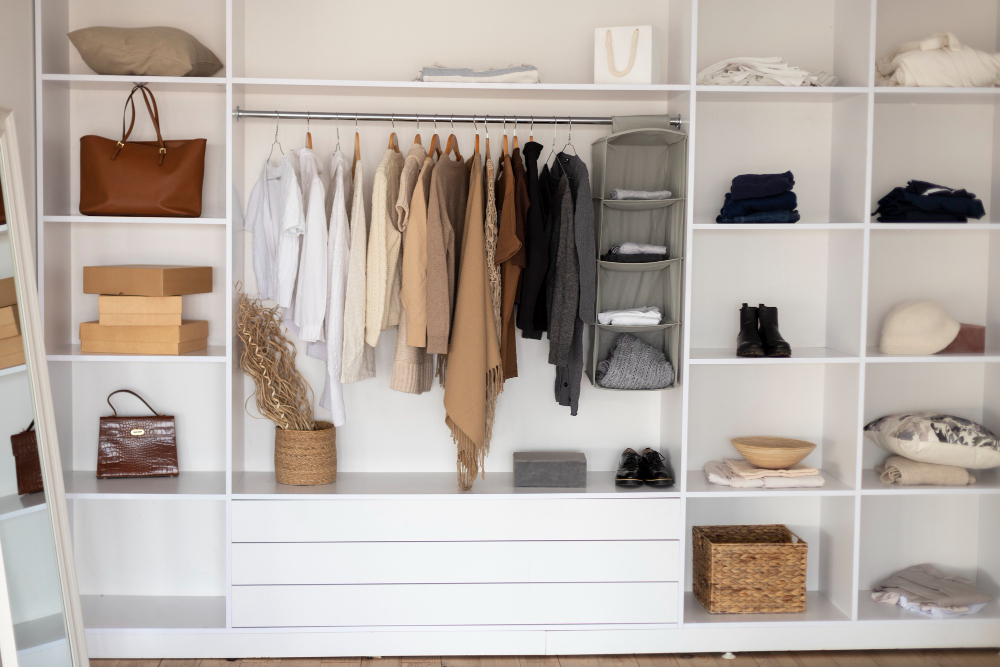
Closets are all about one thing: storage space. When a potential buyer opens a closet door and is met with an avalanche of clothes, shoes, and boxes, the message they receive is, “This home doesn’t have enough storage.”
- Edit your wardrobe: Pack away all off-season clothing and anything you don’t use regularly. A good rule of thumb is to aim for closets that are no more than two-thirds full.
- Organize what’s left: Neatly arrange clothes. Face all hangers in the same direction and group items by color. Store shoes on a rack instead of in a pile on the floor. This attention to detail creates a sense of order and highlights the functionality of the space.
4. Rethink Your Furniture Layout
You’ve lived in your home and arranged the furniture for your family’s comfort and lifestyle. For selling, however, the goal is different. You want to maximize the perceived size of each room and ensure there is a clear, easy path to walk through.
- Less is more: Too much furniture, or pieces that are too large for the room, can make a space feel cramped. Remove any unnecessary items. This might mean taking out an extra armchair, a bulky ottoman, or a secondary bookshelf.
- Define the space: Arrange the remaining furniture to create inviting conversation areas and clear traffic patterns. Pull furniture away from the walls to create a more open feeling. The goal is to show off the room itself, not just how much stuff it can hold.
From Your Home to Their Future
Selling your home is an emotional process. You’re not just selling a structure; you’re letting go of a place filled with memories. However, it’s helpful to reframe your mindset. You are preparing this house to become the backdrop for another family’s future memories.
Each item you pack away is an invitation for a buyer to write their own story. By presenting a clean, neutral, and welcoming space, you are not erasing your past; you are paving the way for the home’s future. As your agent, I have seen time and again how these simple changes can lead to more interest, better offers, and a faster sale. Let’s work together to get your home ready for its next chapter. Mary Tarrant (928) 277-6404.


